What’s Your Story?

Remember last week when I shared a quote from Elizabeth Lesser’s book “The Seeker’s Guide?” Well, I know, I can barely remember yesterday so last week is a stretch for me, too. But God bless WordPress, because all you have to do is scroll down a bit.

So, what was I saying? Right. Last week’s post was about the relationship between joy and sadness. When we allow ourselves to feel the various shades of sadness, we actually enable ourselves to feel greater shades joy. I think of it a little like working your core muscles. If you have back pain, gently strengthening your abdominals, flexors, and obliques can  increase your flexibility and decrease the strain on your spine. But if all you do is try to work one area without any relation to the others … well, you may soon be booking some physical therapy sessions. Just sayin’.

Of course, when we acknowledge the crappy times, what we’re not doing is indulging our woe-is-me victim mentality. We’re not dwelling in every upset, wallowing in past hurts, or blaming others or ourselves. Just noticing. I’m trying to get in the habit of just naming it when I’m in the moment: hurt, hurt, hurt. Or fear, fear, fear.

So if we look back at our lives, what’s the arc of our stories? Have we been telling ourselves—and maybe others—that so much “ick” has happened over the years? Or have we been unwilling to acknowledge a hangnail, let alone a serious upset that threw us for a loop?

I like the following two exercises to get new perspectives on my life.

  1. Elizabeth Lesser says that when she teaches, she asks the class to write their autobiographies of joy—and then grief. Look for any examples—big or small, recent or way back. Don’t worry about getting it right, unless of course you want to make yourself miserable and use THAT as one of your examples in the grief autobiography. Here are some signposts to look for:
    • Joy: times when you felt grateful, peaceful, inspired, energized, excited, open to possibility, pleasantly surprised, content, balanced.
    • Grief: times when you felt longing that went unmet or unfulfilled, disappointment, sadness, great loss, disconnection, or a nagging sense that you’re missing out.

Take a look at the richness of your life. What I find really interesting is that Lesser says: “Rarely does anyone’s autobiography of joy focus on extraordinary events, or lots of money, or fame and status. The stories reveal a core of simple sweetness, a desire for connection, and the ability to grow from the painful events in one’s life. Even if a story of grief tells about illness or violence, at the center of the story stands the inner angel, guarding the heart of the teller.”

2.  And this one is from lovely master coach Martha Beck, in her book “Steering by Starlight.” She calls it Telling Your Life Story Backward. Pick something wonderful that happened in your life—when you met the love or your life, a highlight of your career … you name it. Then think of what key event made that come about. Maybe you were hired as a sub to play in the same orchestra pit where your now-husband was playing. Now think of the key event that led to that moment. Keep going back until you “find one piece of ‘bad luck’ that helped your Favorite Thing come into your life.” Now, when you tell your story, tell it backward. Instead of saying, “this bad thing happened but eventually this great thing was the result,” say, “My destiny was to have my Favorite Thing. Therefore, this bad thing happened in order to make my Favorite Thing possible.”

I hope we all find our new stories, reframe the ones that aren’t helpful to our continued growth, and own all parts of the journey. As Nora Ephron said, “Above all, be the heroine of your life, not the victim.”readingprogram_clip_image002
The Prickly Underbelly of Joy

This weekend was absolutely gorgeous: the temperature was in the low 80s, a cool breeze would occasionally drift through, and in the evening high tufts of clouds dotted the sunset, lit from underneath and topped with pinks and purples. My husband and I had no real plans other than what seemed important in the moment. I read, took a nap, watched a few Season 1 episodes of The Newsroom (had  to catch up before the new season begins tonight), and then we went to the pool for a couple hours to get our Vitamin D. My husband just made me a mai tai with two maraschino cherries—you haven’t had a real mai tai until he makes one for you, let me tell you—and the chicken is on the barbeque.

Pure joy.

No, I’m not exaggerating. I don’t need to bungee jump or buy a beach house to experience joy. Some people are on a never-ending quest for the next kick-ass moment in life, almost like an addiction that feeds on itself. Our society markets the idea that all of us need to always be up to our eyeballs in bliss. We love our self-help books that offer a life of happiness untainted by “negative” emotions. Happiness seems to be just another product in our consumer-driven culture. Is it any wonder that prescription drug use—particularly with opioids, and anti-anxiety meds—is skyrocketing?

What if certain emotions weren’t negative? What if sadness or—God forbid—boredom was necessary? In fact, what if–caution: heresy on the horizon—we could actually experience more joy if we embraced sadness, frustration, and distemper, uhh, I mean, our temper?

Here’s an excerpt from Elisabeth Lesser’s “The Seeker’s Guide“:

[Quoting Chogram Trungpa:] “Tenderness,” he wrote, “contains an element of sadness. It is not the sadness of feeling sorry for yourself or feeling deprived, but it is a natural situation of fullness. You feel so full and rich, as if you were about to shed tears. In order to be a good warrior, one has to feel this sad and tender heart. If a person does not feel alone and sad, he cannot be a warrior at all. The warrior is sensitive to every aspect of phenomena—sight, smell, sound, feelings.” Sadness, in this context, is not the opposite of happiness. The opposite of happiness is a closed heart. Happiness is a heart so soft and so expansive that it can hold all of the emotions in a cradle of openness. A happy heart is one that is larger at all times than any one emotion. An open heart feels everything—including anger, grief, and pain—and absorbs it into a bigger and wiser experience of reality. Joseph Campbell calls happiness the “joyful participation in the sorrows of the world.”

A joyful soul often lives in a state of what I call enchanted melancholy. This kind of happiness contains within it many shades of feelings: joy and grief, passion and sobriety, love and longing, innocence and wisdom. It holds the paradoxical nature of existence in a warm and wide embrace. More than anything, it is a sense of wonder.

With a slight shift of perspective, so much of what we take for granted—like not being sick, or not feeling anxious—can become, instead, states of grateful well-being. We can actively choose to regard neutral feelings—like “no headache” or “no worry”—as not neutral, but as full of joy.

This is my kind of joy. It’s lived at a cellular level as far as I’m concerned. And I would love it if our society stopped labeling any emotion as “negative.” Emotions are emotions; they provide information. We don’t need to let them define us.  More importantly, as Brené Brown says in The Gifts of Imperfection, “We cannot selectively numb emotions; when we numb the painful emotions, we also numb the positive emotions.”

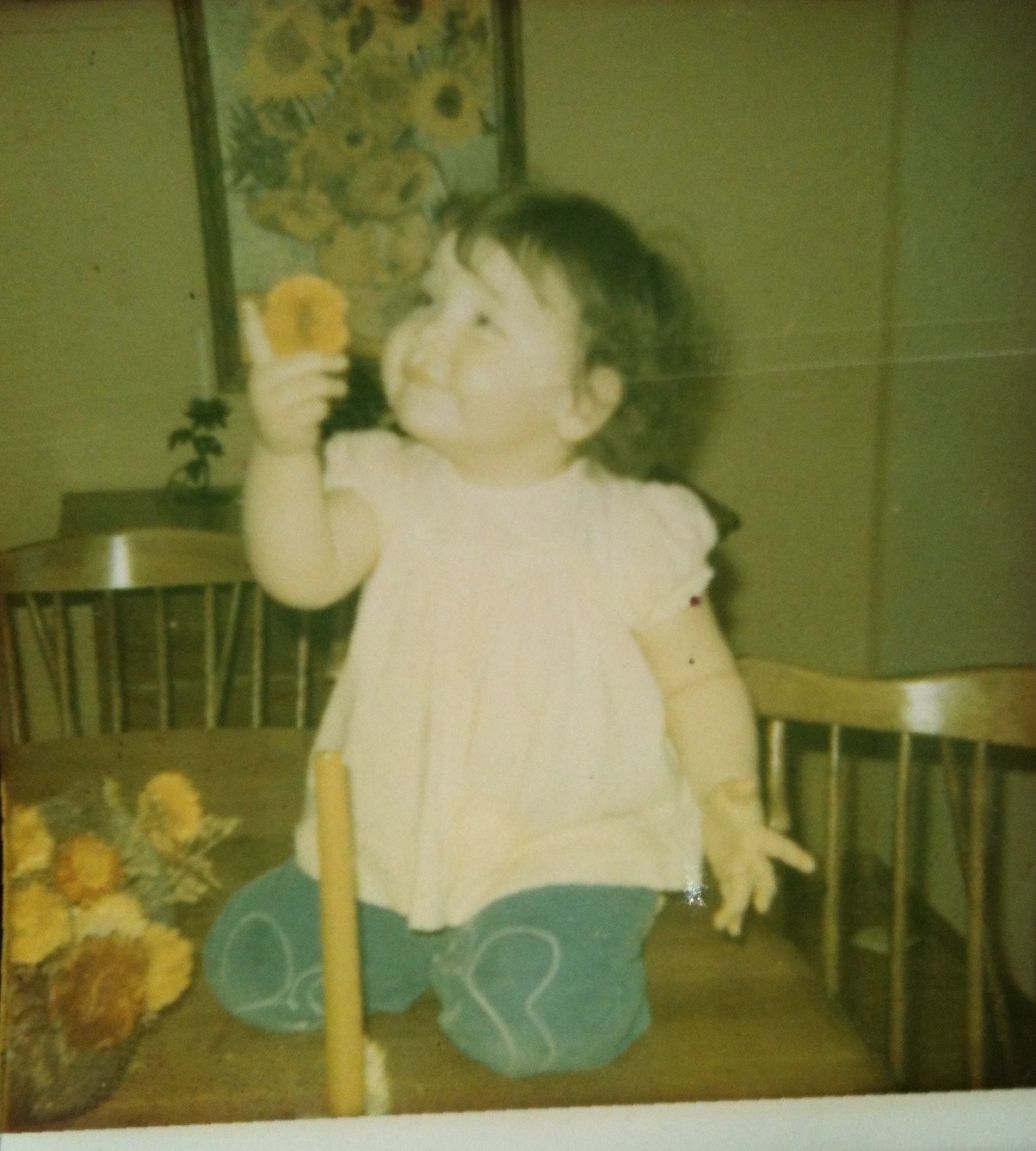
lynn-coye-originalWhat if, instead of labeling our sadness or anger or irritation as “bad” and pushing it underground, we got curious? What if we took a moment to feel into the experience, to be a detective? Where do you feel it in your body? Imagine for a second, what is the texture or color of it? And then, after a bit, does it change? You might begin to see how all emotions shift and change once you take notice. And you just might start living your way into a joy-filled life—the kind  where even a prickly little dried flower makes you absolutely delighted and alive with childlike wonder.


Why Would You Go to See That?

I love movies. I love getting lost in the ambiance that’s in every detail, the conversation between characters, the wardrobe, the wide shot views … oh, and the popcorn. With butter. Mostly I go to the big screen as a way to step out of life for a bit and be entertained. Sometimes I go for a good cry.

Recently I convinced my loving husband to join me in seeing a re-release of Schindler’s List. It would not be accurate to say that he was jumping up and down with excitement at this invitation. His first choice would be comedy — which this definitely isn’t — and then action — not this kind. Drama is tolerable as long as it has a happy ending. Right. I couldn’t explain why I felt so drawn to see it, but he went with me anyway.

I saw, felt, and learned so much more than when I saw it 20 years ago. And when we walked out of the theatre, I knew why I had felt so compelled to go.

  • I will not allow myself to turn away from other people’s pain, although it would be easier. We’ve all been through events in life when we wish people had been able to empathize, to support us not by fixing things but just by witnessing our struggle with an open heart. It takes practice being with our own pain so that we can be with others’ pain. And sometimes we need to be with others’ stories of anguish so that we can accept our own. Ultimately, I believe my heart is more capable of joy when it has the space to embrace all aspects of life.
  • I heard Stephen Levine in a Conscious Living, Conscious Dying workshop say that hating Hitler is pointless. Until we understand how such hatred comes to fruition and realize that we each bear aspects of evil within us, we cannot heal–ourselves, others, the world. It’s easy enough to recognize atrocity when it’s revealed, but I want to take action in the small and subtle ways that could make a difference before that happens.
  • I need to remember that in the midst of horrific events and despair, there were people who made a difference as they could. I am all too tempted to believe that unless I can make a huge impact in the world, my efforts are insignificant. Which means I sometimes fail to try. At the end, the Talmudic quote that’s inscribed on the ring they give Schindler says it all: “Whoever saves one life saves the world entire.”

Was this an uplifting night of fun with buttered popcorn? Uh, no. This time I didn’t go to escape life, but to be drawn into its depths so that it can change me.

Just Change Their Names, Clothing Styles, and Hair Color

Nora Ephron’s mother was totally right: everything is copy. When life goes sideways, blog— Everything that happened to youthat’s my new motto. I’m also a huge fan of Anne Lamott who said, “You own everything that happened to you. Tell your stories. If people wanted you to write warmly about them, they should’ve behaved better.” Amen, sister.

A friend of mine told me yesterday that she wants to write some sort of guidebook for new mothers-in-law. K. remembers vividly that when she was first married, her mother-in-law drove her crazy. Now, as she and her friends are entering into the phase of life where they themselves will soon be mothers-in-laws, they don’t want to inflict the same pain on their children and their spouses.

So I really want to help her out—and ultimately, make the world a better place. My ideals are high…yet my sarcasm is sharp.

I don’t know how these just came to me out of the blue. Hard to say when and how the muse strikes, y’know? Here, for consideration, are the Top Ten Tips for Being a Wonderful Mother-in-Law.

  1. If you’re friggin’ crazy and delusional, stick to communicating with your daughter-in-law by cards and letters at holidays and birthdays.
  2. Remember that you no longer have a relationship with just your child; you have a relationship with them both. Playing one against the other leads to you hosting weekend solitaire marathons.
  3. Look up the definition of relationship—is your name listed as the only one who gets to decide what this looks like?
  4. When you visit, don’t stay with your son’s ex-wife. See #1.
  5. If you go to see your daughter-in-law in the hospital, don’t make remarks about how you never got sick because you simply told your body that it wasn’t acceptable.
  6. If you want more communication with them, learn to dial a phone once in a while. At your age, learning new things keeps the mind fresh and nimble.
  7. Contrary to reality TV, your guilt trips, whining, martyrdom, and yelling does not make anyone actually want to spend time with you. See #1.
  8. When someone wants to hug you, try not to act like a corpse in rigor mortis; hugging won’t kill you so stop acting like you’re already dead.
  9. You are not the queen of England nor the reigning monarch of any fictional land of [insert surname here]. Get over yourself.
  10. If you can recite at a moment’s notice every perceived slight, misunderstanding, and foible related to your daughter-in-law, you need a hobby. Try drugs. Then see #1.

Slide1

Sweating the Small Stuff

I went to yoga this morning, and damn, it was warm in that studio. We’d barely reached cat-cow warmups and I was already perspiring. Granted, my internal thermometer has recalibrated since a few months ago, when apparently I began to enter the wonders of mid-life. I used to be able to walk/jog for 45 minutes and barely break out in a glow. Not today. I was praying we wouldn’t attempt any quick twists that might turn me into a Rain Bird sprinkler. When our benevolent torturer, I mean, instructor suggested a pose that I’m not even sure Patanjali knew, I reached for a towel to wipe my face and took a breather. As I caught back up with the class in the next pose, our yogini gently reminded us that fidgeting is a sign of an unfocused mind. Adjusting our tops or brushing hair out of our eyes is just a way to not stay in the pose. And if instead we learned to stay, it could bring us many benefits in life.

I agree with her. Mostly.

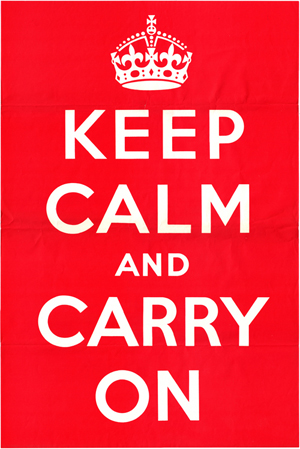
Not running from the difficulties and annoyances of life is typically a good sign of maturity. We teach our children to stick with their algebra homework because we know that, in the long run, they’ll learn more—about themselves and life—than what’s on the page. We want life partners who won’t file for divorce when the dogs get skunked three times in one year (sorry, hKeep-calm-and-carry-on-scanoney!) And we need professionals in every line of work who can slog through problems and find solutions that make this a better world for all of us. When we choose to override our desires in service of something bigger than us, something more meaningful, that’s a good move. Think “keep calm and carry on,” the British motivational slogan during World War II, which ironically is now paraphrased to market every indulgence in the world. That said, fortitude is definitely a virtue. Until it’s not.

Sometimes it’s just ego masquerading as true grit. Look how strong I am, look how brave I am. I’ve seen so many people stick with a job that’s a bad fit because they don’t want to go back on their word, or be seen as weak, disloyal or not committed enough. Yep, I’ve done that and stuck with a role long enough that I thought I might be committed. I thought I should’ve been able to handle it.

Of course, I’ve also put my head down and plowed through because I didn’t know any other way. “Walk it off,” “suck it up,” and “stiff upper lip” were the bylaws of our family. My parents were doing the best they could with what they knew, but unfortunately staying was a euphemism for “stuffing it.” So it became my factory setting. In fact, it was so ingrained that I started to believe that if something wasn’t challenging then it wasn’t worthy. Life itself became a matter of delayed gratification. Self-care was frivolous.

When I was 24 I decided to take a second stab at a masters in music and moved 2,000 miles from San Francisco to Minneapolis to attend the University of Minnesota. No friends, no family, no job, totally different climate—a huge leap of faith. And of course, getting a masters in music performance is no assurance of a career. But I thought it was my calling, a gift I was meant to pursue. When I moved, I met with challenge after challenge: I broke my lease after two days, and forfeited $1000, because I discovered I needed a safer neighborhood; I learned I would not be studying with the masters-level flute instructors and would instead be assigned to the undergraduate teacher (but still pay masters-level tuition, ahem); the job I’d found was “downsized” to less than part-time; I took a series of temp jobs that drained me; I had daily migraines; I wasn’t able to feel connected in my new church community. Other people seemed to be able to handle situations like this so I should, too. I thought it was my path in life, and I just needed to find a way around the hurdles. Weren’t these just tests along the way? Or was I ignoring both the signs of the universe and those of my own body that said it was time to go in another direction? After eight months of determination and a near breakdown, I moved back home to start over. For me, the bigger leap of faith was changing direction, even when I didn’t know what that direction was.

So if staying isn’t always the answer, how do you know when to hold ’em and when to fold ’em? Here’s what I’ve figured out so far:

  1. Is there some sort of a “should” involved? Shoulds and shouldn’ts don’t get a vote. I have to go deeper into a place of calm reflection to hear what I truly want in a situation. And not what I don’t want, but what I do want. I sit with that question until I can define it in a way that resonates with me.
  2. There’s more than one way to stay. In my Minneapolis example, what I’d really wanted was to find and live my life purpose. I thought the obvious answer was to continue my music studies; I loved playing, expressing myself through music, and I loved studying—and was good at it. My error was in assuming that a master’s in music was the only gift I had to give, the only way to stay with that intention.
  3. Am I sacrificing self-care for staying power? When I tell myself at 11 p.m. that I just need to get through five more emails before I go to bed, I’m not doing anyone any favors. Studies show that we are more productive when we take care of ourselves.
  4. Does the urge to stay feel like “shackles on” or “shackles off?” This is the test Martha Beck outlines in her fabulous book “Finding Your Own North Star” and it helps me confirm or deny the previous steps. If I have a visceral reaction—however slight—that choosing to stay feels like my shoulders hunching forward and my head tucking down, I need to consider other options. If choosing to stay feels calm and unfettered, regardless of the challenges I know I may face, then that’s the path I take. For now. When situations change, I come back and go through all the steps again, even if it’s just the next day.

So back to yoga. When I broke the pose, was I being lazy or attending to self-care? Probably a little of both, to be honest. What I know is that at this point in my life, I need to exercise the muscle of self-care, because it’s atrophied. So I consciously chose to break the pose to let my body know I will no longer ignore its messages. And over time, as both my staying muscle and self-care muscle become equally matched, I will expand my range in all directions.

Living the Question

“I define myself more by my questions than by my answers. Answers come and go. Questions remain.”

~ Elie Wiesel, in an interview with Oprah Winfrey

What the hell am I doing here? And I mean that in so many different ways, but I’ll contain this to the online world. What the hell am I doing blogging? Why the heck did I make a commitment to my coach to write my first post this weekend? How in the world do I find my own voice and speak my truth without sounding preachy or conveying that it’s the truth? Will anyone care?

Ahhh, there’s the rub. Most of my questions, when reduced down to their thick, syrupy essence, reveal one primary ingredient: the feeling that I just don’t belong. And I’m really tired of this story. Yep, I know the history of its origins. I know how it was nurtured, by circumstances and by my interpretation of those events. I’m trying not to be hard on myself; after all, what takes seed when you’re young can go unexamined for decades before you realize it’s a weed. But it’s time to move on.

So my question is, how do I find belonging? It feels like a quality that relies on external events—as though I need to know that others accept me before I can feel it. But I’m no longer willing to let this depend on the kindness of strangers. I want my belonging to be portable. I want to belong even if I’m “one of those kids who’s doing her own thing.” Because most likely—if my 43 years of life so far is any indication of the future—I will be “doing my own thing.” I need it to start with me.

Ok, so what do *I* want to belong to? I want to belong to myself. How? I don’t know yet, but I guess that’s the question I need to keep asking. Here’s where I’m going to start:

  • I will no longer silently shun and shame my pooh-bear-tummy because it doesn’t look like the tight abs featured in magazines. In the mornings, I’ll hold my feet, my knees, ribs, tummy, and neck and remind them—and all the parts in between, the tendons underneath, the organs inside—that I’m grateful for what they’ve done for me and what they are about to do that day.
  • Every day I’m going to go on the hunt for things that I love—sights, sounds, colors, ideas, people, places, poems, movies, moments, you name it. And I’m going to find ways to work these things into every day. Because that’s what I would do for a friend if she was feeling a bit untethered.
  • I’ll no longer measure myself by society’s extroverted standards. If I choose not to share a thought during a conference call, that’s fine; it’s a choice and no longer a default reaction. If my version of joy one Saturday morning involves my Kindle,  a tall non-fat chai, the dogs lounging at my feet, and my husband reading the paper nearby, I won’t let anyone say that it doesn’t kick ass. I will feed my need for connection through one-on-one or small group conversations. I’m looking for others who also may not feel they belong, and we’ll belong together.
  • I will teach others how to treat me. It’s time for me to let go of devaluing my role as a stepmom and help others do the same. Constantly interrupting me? Not ok. Regularly being rude and dismissive to me at work? Let’s find a better way.

photoI realized the other day that this “I don’t belong” lid has an energetic flip side: a longing for connection. So maybe I need to “be-” with this “-longing.” And honor my longing to just be. It starts with me.

Self-Portrait

by David Whyte

It doesn’t interest me if there is one God
or many gods.
I want to know if you belong or feel
abandoned,
if you can know despair or see it in
others.
I want to know
if you are prepared to live in the world
with its harsh need
to change you. If you can look back
with firm eyes,
saying this is where I stand. I want
to know
if you know
how to melt into that fierce heat of
living, falling toward living,
falling toward
the center of your longing. I want to
know
if you are willing
to live, day by day, with the
consequence of love
and the bitter
unwanted passion of your sure
defeat.

I have heard, in that fierce embrace,
even
the gods speak of God.