What’s Your Story?

Remember last week when I shared a quote from Elizabeth Lesser’s book “The Seeker’s Guide?” Well, I know, I can barely remember yesterday so last week is a stretch for me, too. But God bless WordPress, because all you have to do is scroll down a bit.

So, what was I saying? Right. Last week’s post was about the relationship between joy and sadness. When we allow ourselves to feel the various shades of sadness, we actually enable ourselves to feel greater shades joy. I think of it a little like working your core muscles. If you have back pain, gently strengthening your abdominals, flexors, and obliques can  increase your flexibility and decrease the strain on your spine. But if all you do is try to work one area without any relation to the others … well, you may soon be booking some physical therapy sessions. Just sayin’.

Of course, when we acknowledge the crappy times, what we’re not doing is indulging our woe-is-me victim mentality. We’re not dwelling in every upset, wallowing in past hurts, or blaming others or ourselves. Just noticing. I’m trying to get in the habit of just naming it when I’m in the moment: hurt, hurt, hurt. Or fear, fear, fear.

So if we look back at our lives, what’s the arc of our stories? Have we been telling ourselves—and maybe others—that so much “ick” has happened over the years? Or have we been unwilling to acknowledge a hangnail, let alone a serious upset that threw us for a loop?

I like the following two exercises to get new perspectives on my life.

  1. Elizabeth Lesser says that when she teaches, she asks the class to write their autobiographies of joy—and then grief. Look for any examples—big or small, recent or way back. Don’t worry about getting it right, unless of course you want to make yourself miserable and use THAT as one of your examples in the grief autobiography. Here are some signposts to look for:
    • Joy: times when you felt grateful, peaceful, inspired, energized, excited, open to possibility, pleasantly surprised, content, balanced.
    • Grief: times when you felt longing that went unmet or unfulfilled, disappointment, sadness, great loss, disconnection, or a nagging sense that you’re missing out.

Take a look at the richness of your life. What I find really interesting is that Lesser says: “Rarely does anyone’s autobiography of joy focus on extraordinary events, or lots of money, or fame and status. The stories reveal a core of simple sweetness, a desire for connection, and the ability to grow from the painful events in one’s life. Even if a story of grief tells about illness or violence, at the center of the story stands the inner angel, guarding the heart of the teller.”

2.  And this one is from lovely master coach Martha Beck, in her book “Steering by Starlight.” She calls it Telling Your Life Story Backward. Pick something wonderful that happened in your life—when you met the love or your life, a highlight of your career … you name it. Then think of what key event made that come about. Maybe you were hired as a sub to play in the same orchestra pit where your now-husband was playing. Now think of the key event that led to that moment. Keep going back until you “find one piece of ‘bad luck’ that helped your Favorite Thing come into your life.” Now, when you tell your story, tell it backward. Instead of saying, “this bad thing happened but eventually this great thing was the result,” say, “My destiny was to have my Favorite Thing. Therefore, this bad thing happened in order to make my Favorite Thing possible.”

I hope we all find our new stories, reframe the ones that aren’t helpful to our continued growth, and own all parts of the journey. As Nora Ephron said, “Above all, be the heroine of your life, not the victim.”readingprogram_clip_image002
The Prickly Underbelly of Joy

This weekend was absolutely gorgeous: the temperature was in the low 80s, a cool breeze would occasionally drift through, and in the evening high tufts of clouds dotted the sunset, lit from underneath and topped with pinks and purples. My husband and I had no real plans other than what seemed important in the moment. I read, took a nap, watched a few Season 1 episodes of The Newsroom (had  to catch up before the new season begins tonight), and then we went to the pool for a couple hours to get our Vitamin D. My husband just made me a mai tai with two maraschino cherries—you haven’t had a real mai tai until he makes one for you, let me tell you—and the chicken is on the barbeque.

Pure joy.

No, I’m not exaggerating. I don’t need to bungee jump or buy a beach house to experience joy. Some people are on a never-ending quest for the next kick-ass moment in life, almost like an addiction that feeds on itself. Our society markets the idea that all of us need to always be up to our eyeballs in bliss. We love our self-help books that offer a life of happiness untainted by “negative” emotions. Happiness seems to be just another product in our consumer-driven culture. Is it any wonder that prescription drug use—particularly with opioids, and anti-anxiety meds—is skyrocketing?

What if certain emotions weren’t negative? What if sadness or—God forbid—boredom was necessary? In fact, what if–caution: heresy on the horizon—we could actually experience more joy if we embraced sadness, frustration, and distemper, uhh, I mean, our temper?

Here’s an excerpt from Elisabeth Lesser’s “The Seeker’s Guide“:

[Quoting Chogram Trungpa:] “Tenderness,” he wrote, “contains an element of sadness. It is not the sadness of feeling sorry for yourself or feeling deprived, but it is a natural situation of fullness. You feel so full and rich, as if you were about to shed tears. In order to be a good warrior, one has to feel this sad and tender heart. If a person does not feel alone and sad, he cannot be a warrior at all. The warrior is sensitive to every aspect of phenomena—sight, smell, sound, feelings.” Sadness, in this context, is not the opposite of happiness. The opposite of happiness is a closed heart. Happiness is a heart so soft and so expansive that it can hold all of the emotions in a cradle of openness. A happy heart is one that is larger at all times than any one emotion. An open heart feels everything—including anger, grief, and pain—and absorbs it into a bigger and wiser experience of reality. Joseph Campbell calls happiness the “joyful participation in the sorrows of the world.”

A joyful soul often lives in a state of what I call enchanted melancholy. This kind of happiness contains within it many shades of feelings: joy and grief, passion and sobriety, love and longing, innocence and wisdom. It holds the paradoxical nature of existence in a warm and wide embrace. More than anything, it is a sense of wonder.

With a slight shift of perspective, so much of what we take for granted—like not being sick, or not feeling anxious—can become, instead, states of grateful well-being. We can actively choose to regard neutral feelings—like “no headache” or “no worry”—as not neutral, but as full of joy.

This is my kind of joy. It’s lived at a cellular level as far as I’m concerned. And I would love it if our society stopped labeling any emotion as “negative.” Emotions are emotions; they provide information. We don’t need to let them define us.  More importantly, as Brené Brown says in The Gifts of Imperfection, “We cannot selectively numb emotions; when we numb the painful emotions, we also numb the positive emotions.”

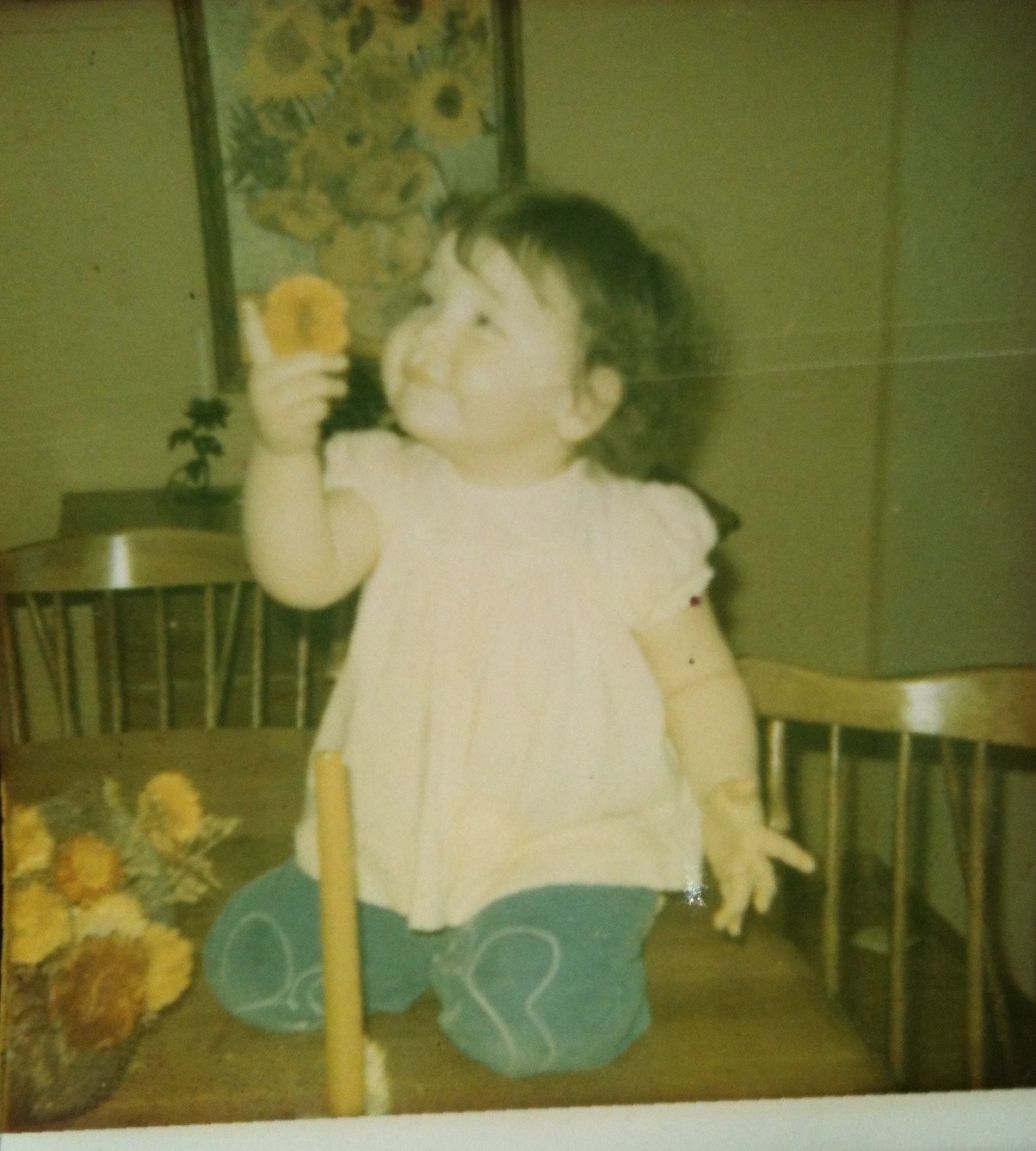
lynn-coye-originalWhat if, instead of labeling our sadness or anger or irritation as “bad” and pushing it underground, we got curious? What if we took a moment to feel into the experience, to be a detective? Where do you feel it in your body? Imagine for a second, what is the texture or color of it? And then, after a bit, does it change? You might begin to see how all emotions shift and change once you take notice. And you just might start living your way into a joy-filled life—the kind  where even a prickly little dried flower makes you absolutely delighted and alive with childlike wonder.